Mouth Ulcers – What Are the Causes and How to Treat It
29 October 2020 | Updated: 13 October 2025
Mouth ulcers, also known as canker sores, are small but painful lesions that develop inside the mouth or along the gums. They can make everyday activities like eating, drinking, and speaking uncomfortable.
While mouth ulcers are not contagious and usually heal on their own within one to two weeks, larger or persistent sores may require professional attention.
In this article, we’ll explain what mouth ulcers are, what causes them, and the most effective ways to treat and prevent them.
Types of Mouth Ulcers
There are three different types of recurrent mouth ulcers:
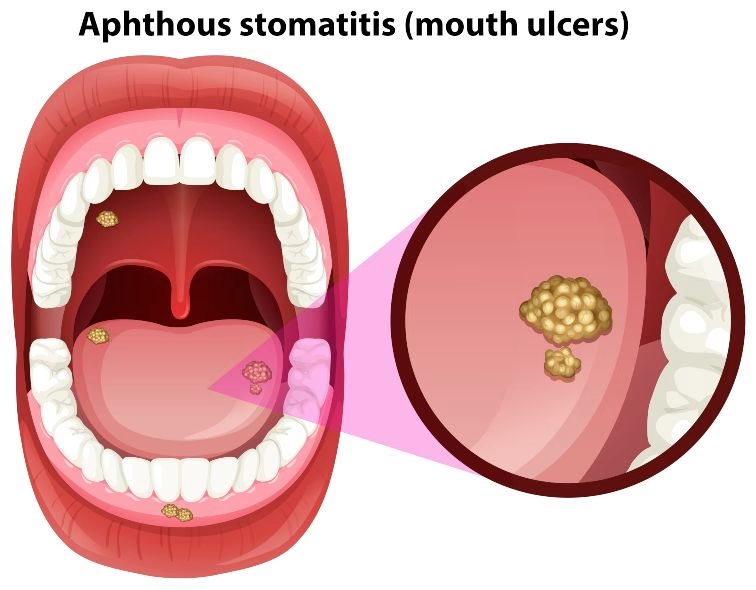
Minor canker sores are the most common type of ulcers. They can develop inside the cheeks, and on the tongue, lips, and gums. Sometimes, but more rarely, they can form on the roof of the mouth. Most of these canker sores are the size of the tip of a pencil and can seldom come in clusters. It is possible to have four to six at any one time. These ulcers may show around three to four times a year. They usually happen in people between ages 10 to 20.
Large canker sores are more severe ulcers and can take a longer time to heal. Large ulcers may develop near the tonsils and can be extremely painful, particularly when you swallow. Usually, you only get one ulcer at a time. The ulcers can last more than two weeks. They usually heal with scarring. If large canker sores last longer than three weeks you should go to your doctor or dentist.
Herpetiform canker sores rare and they occur as clusters of small ulcers. It is possible to have up to a hundred small and painful ulcers which can last for one to two weeks.
However, these last two types are very rare.
You may get sores in different parts of your body such as your eyes or even the genital area. Women, teenagers, and persons with a family history of mouth ulcers are at greater risk of getting mouth ulcers. Therefore, it is important to seek oral advice from your doctor as soon as you notice the two types of canker sores.
What Causes Canker Sores?
Doctors still cannot agree about what causes mouth ulcers. There is no specific cause behind the developing of canker sores. Nevertheless, several often factors and triggers have been recognised.
Food irritations to acidic foods like lemon, strawberries, and pineapples, and other trigger foods like coffee, chocolate, eggs, cheese, nuts, and spicy foods
Allergic reaction to bacteria in your mouth
Deficiency of essential vitamins, particularly B-12, folate, zinc, and iron
Emotional stress, anxiety, and deprivation of sleep
Hormonal shifts during menstruation
Nonsteroidal anti-inflammatory medications like ibuprofen
Bacterial, fungal, or viral infections
Sometimes, mouth ulcers also can be a sign of more severe conditions that demand medical treatment, such as:
Celiac disease (a condition in which your body is unable to tolerate gluten)
Diabetes mellitus
Inflammatory bowel disorder, such as ulcerative colitis and Crohn’s disease
A weak and damaged immune system that makes your body to attack the healthy mouth cells instead of pathogens such as bacteria and viruses
Behcet’s disease (a condition that creates inflammation throughout your body)
HIV/AIDs
Cancer of the mouth can initially look like a mouth ulcer. The canker sores caused by mouth cancer are usually single and remain for a long time without any visible nearby cause (for instance a sharp tooth). Canker sores caused by cancer usually develop on or under the tongue, but may seldom appear someplace else in the mouth.
Cancer of the mouth is usually connected to heavy drinking and smoking. Doing both together considerably increases the risk of mouth cancer.
When Should I See My Doctor?
Mouth ulcers are a type of sore that appears on the inside of your mouth. They can be painful, especially when you are eating, talking, drinking and brushing your teeth.
Mouth ulcers are often round and white/grey and usually appear inside the cheeks, lips, on the bottom of the mouth, on the gums or tongue. In most cases, canker sores are harmless and usually clear up on their own.
Mouth sores will ordinarily only last for a couple of weeks. However, if your mouth sores last longer than this, it is recommended to visit your doctor or dentist. Call your dentist if you have:
Unusually big sores
Sores that last three weeks or more
Mouth ulcers that spread
Severe pain despite avoiding trigger foods and taking pain medication
High fever along with canker sores
Difficulty drinking sufficient fluids
Doctors can normally make a proper diagnosis based on your medical history and a physical exam. They might want to examine your blood to see if a vitamin deficiency or another health condition is causing the mouth ulcers.
Even though most mouth ulcers are harmless, a long-lasting ulcer is seldom a sign of a severe condition. Therefore, it is best to get it checked before further complications occur.
Mouth Ulcers Treatment
Most of the time mouth ulcers will disappear within a week. You can reduce the pain with an anaesthetic mouth gel applied to the area. These types of gels you can usually buy at any pharmacy. Pain from a canker sore tends to get better in a couple of days, and the sores usually recover without treatment in about a week or two.
Mouth ulcer treatment for long-lasting, large, or very painful sores might include:
Mouthwashes: Your doctor or dentist can prescribe a rinse that contains painkillers or steroids.
Oral medications: The ulcer medicine sucralfate (Carafate) and the gout drug colchicine (Mitigare) can also help with canker sores. Sometimes, your doctor might prescribe you steroid pills.
Nutritional supplements: If you suffer from a nutrient deficiency that is causing your canker sores, nutritional supplements can help you with mouth ulcers.
Cautery: If your pain is excruciating and unbearable, dental lasers can help you feel better right away. Your doctor can also cauterize mouth ulcers with chemicals like silver nitrate and debacterol.
Often quote in medicine is that “an ounce of prevention is worth a pound of cure”. It is important to keep yourself healthy and in good condition so your body can take care of itself.
Here are some bits of advice on how to approach this condition and ease your pain:
Do not to touch the painful area. You can disturb the healing process and cause an infection to spread. If you do need to touch the sores, be sure you wash your hands before and after.
When you clean your teeth, use a soft toothbrush. If your clanker sores are too painful that you can’t brush your teeth, use a mouthwash with chlorhexidine instead. Do not use mouthwashes that contain alcohol.
Eat soft foods.
Do not eat hot or spicy foods and drinks. Drinking cool water can aid to reduce pain in your mouth.
Try drinking through a straw to reduce pain.
How to Get Rid Of Mouth Ulcers with Home Remedies
If you’re wondering how to get rid of mouth ulcers without visiting the doctor, you might find the solution in your own kitchen. Below are some effective home remedies that can help soothe and heal mouth ulcers naturally:
Honey is an excellent remedy due to its antibacterial qualities. Honey maintains moisture and stops your mouth from becoming dry. It also accelerates the process of further tissue growth. Doctors often suggest that you apply raw honey to the sores or you can also mix it with amla powder and gently rub on the afflicted area. You can even combine a pinch of turmeric with honey. This helps the process of healing.
Mulethi powder is known for its medicinal properties, especially for mouth ulcers caused due to stomach illness. Mulethi is best used with water or with some honey. It helps in cleansing your stomach and eliminates toxins that could be responsible for the sores.
Triphala is a herbal powder made out of three Indian fruits: Amalaki, Haritaki, and Bibhitaki. Mix half a teaspoon of Triphala with one cup of water to create a decoction. Rinse your mouth with it once a day. Keep it in your mouth for one to two minutes and then spit it out. Triphala has potent healing and anti-inflammatory qualities. Like Mulethi, Triphala helps with stomach related mouth ulcers.
Mishri and Camphor are another home remedy that will help you with sores. You can grind eight grams mishri with one gram of camphor. Apply this powder gently on the sores. This mix is known to decrease swelling and irritation. Mishri is often used as a mouth freshener. It is also known to reduce any inflammation in the mouth. Camphor is another ingredient that can help you reduce ulcers completely.
Coconut oil has been known for its healing properties. Rinse some of your mouths with coconut oil and then spit it out. Repeat it several times a day. This will help decrease swelling and pain.
Try washing your mouth with aloe vera juice several times a day to get relief. This simple home cure is the most natural way to treat mouth ulcers. Aloe vera also has anti-inflammatory qualities. Drinking aloe vera juice is identified to cure even stomach ulcers. It provides relief by healing the stomach wall and diminishing acidic secretions.
Visiting a dentist is the most effective way to treat canker sores and prevent them from recurring. For professional care and lasting relief, schedule an appointment with MGA Dental, where experienced dentists can provide the right diagnosis and treatment for your condition.
A dental emergency can escalate quickly, often outside standard clinic hours and with little warning. Sudden tooth pain, facial swelling, or oral trauma can quickly disrupt daily life. When eating, speaking, or sleeping becomes difficult, uncertainty tends to set in fast. In these moments, many people face a practical question: should the Emergency Room (ER) […]
Losing a tooth can be distressing, but staying calm and acting quickly can make all the difference in saving it. When a tooth is completely displaced from its socket, known as a knocked-out or avulsed tooth, it becomes a true dental emergency. The outcome depends on how the tooth is handled and how soon professional […]
When it comes to dental health, it’s not just about brushing and flossing your teeth. If you wear a retainer, proper cleaning and care are essential to keep it in good condition and maintain your oral health. Cleaning your retainer regularly can prevent the buildup of bacteria and plaque, which can lead to bad breath, […]
Noticing that your tongue has changed its color can be a stressful experience if you don’t know what is the cause of the discoloration. Changes in the color of your tongue can be subtle or dramatic, depending on the underlying health issue. In this article, we’ll outline the most common types of tongue discoloration to […]
Recovering from a tooth extraction does not end when the procedure is over. What you eat in the days that follow plays a major role in how quickly and comfortably your mouth heals. Choosing the wrong foods too soon can irritate the extraction site, dislodge the protective blood clot, and increase the risk of pain, […]
Maintaining good oral hygiene means brushing your teeth twice a day and flossing regularly. But if you’re diligent about your dental care, you may have wondered: is it possible to brush too much? According to dental experts, the answer is yes. Overbrushing can actually cause damage to your teeth and gums over time. If you […]
A smile is worth a thousand words and white teeth are one of the key factors for a beautiful smile. A bright and happy smile brings confidence and attractiveness. Luckily, there are numerous ways of obtaining them with teeth whitening. Nowadays, one of the most popular treatments for achieving white teeth is laser teeth whitening. […]
If you are missing one or more teeth, you may already be exploring options to restore your smile and chewing function. Dental bridges are a common solution, but a traditional bridge is not always suitable for every situation. When neighbouring teeth are not strong enough to provide support on both sides, a cantilever dental bridge […]
Multiple Sclerosis (MS) may not seem directly related to dental health at first glance, but the connection is stronger than many realise. This chronic neurological condition can affect a person’s ability to maintain proper oral hygiene, leading to an increased risk of dental problems and complications during treatments such as tooth extractions. Understanding how Multiple […]